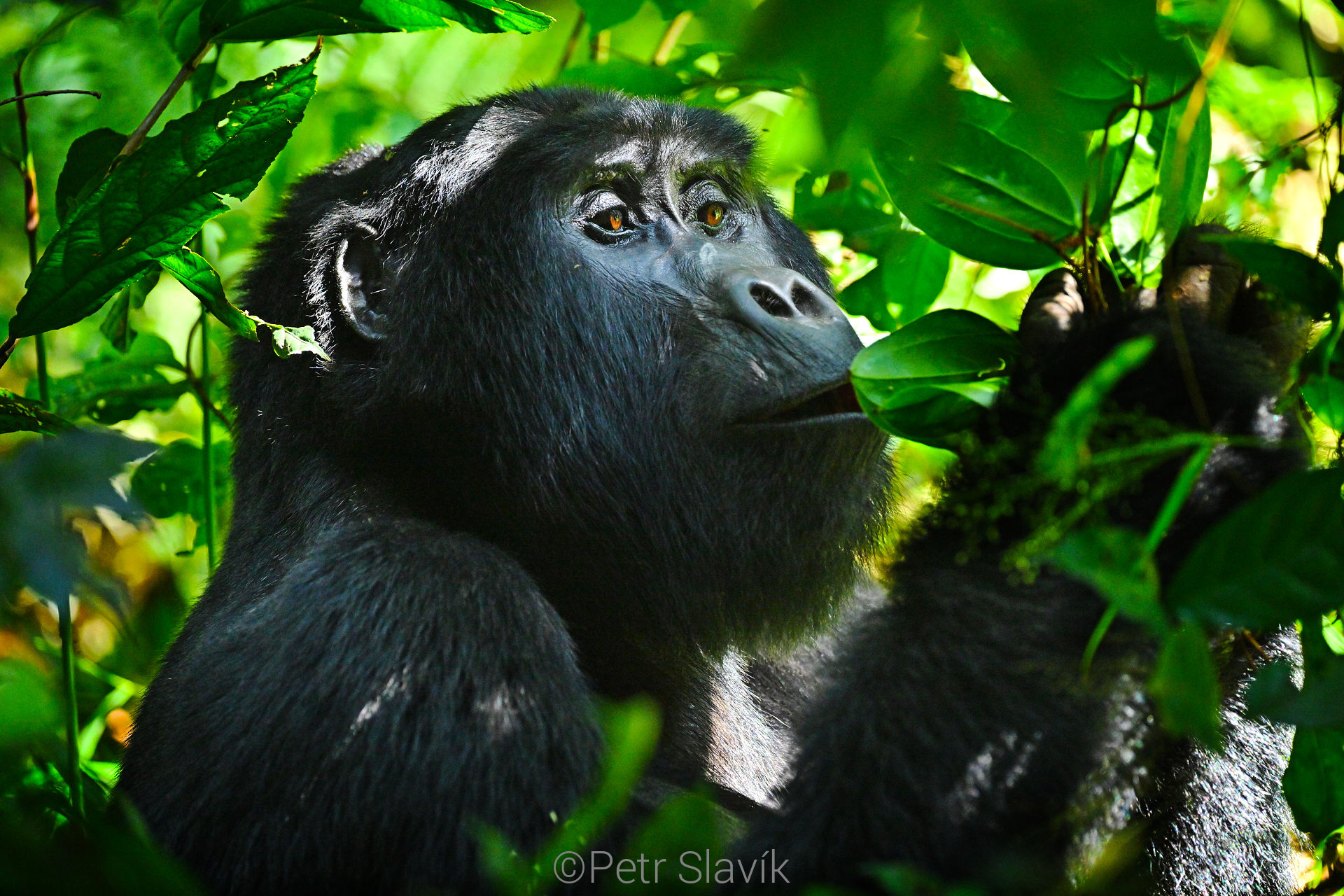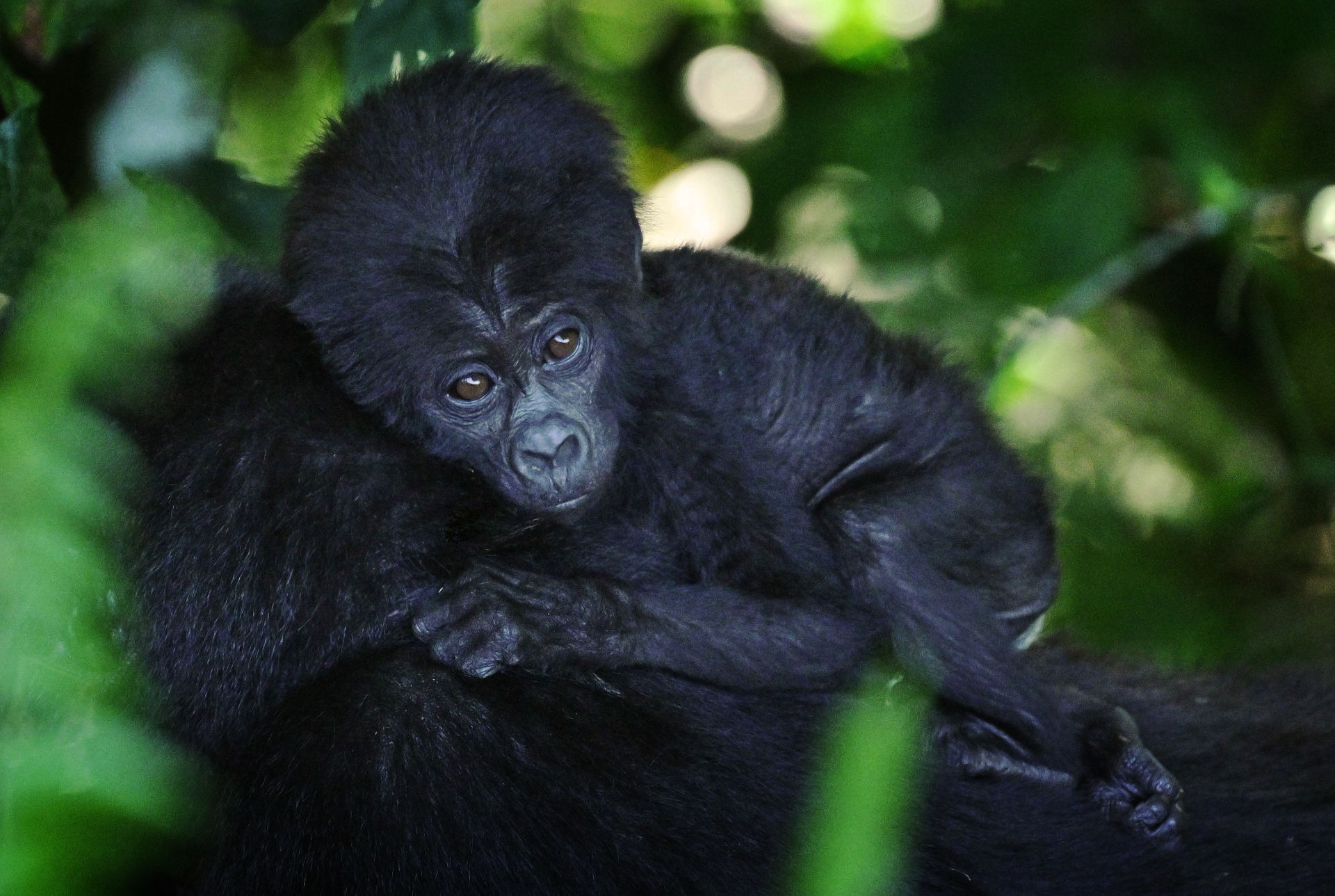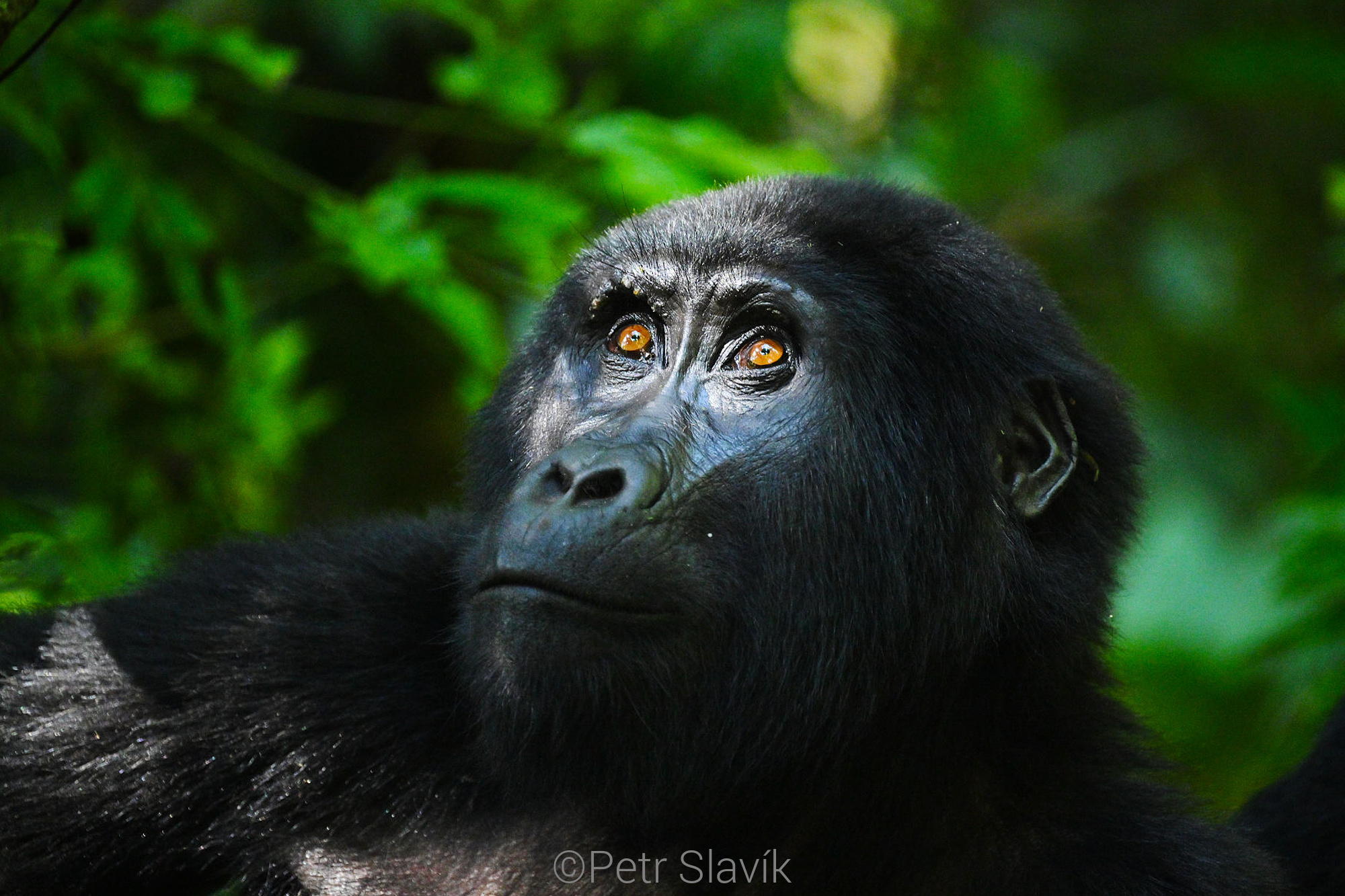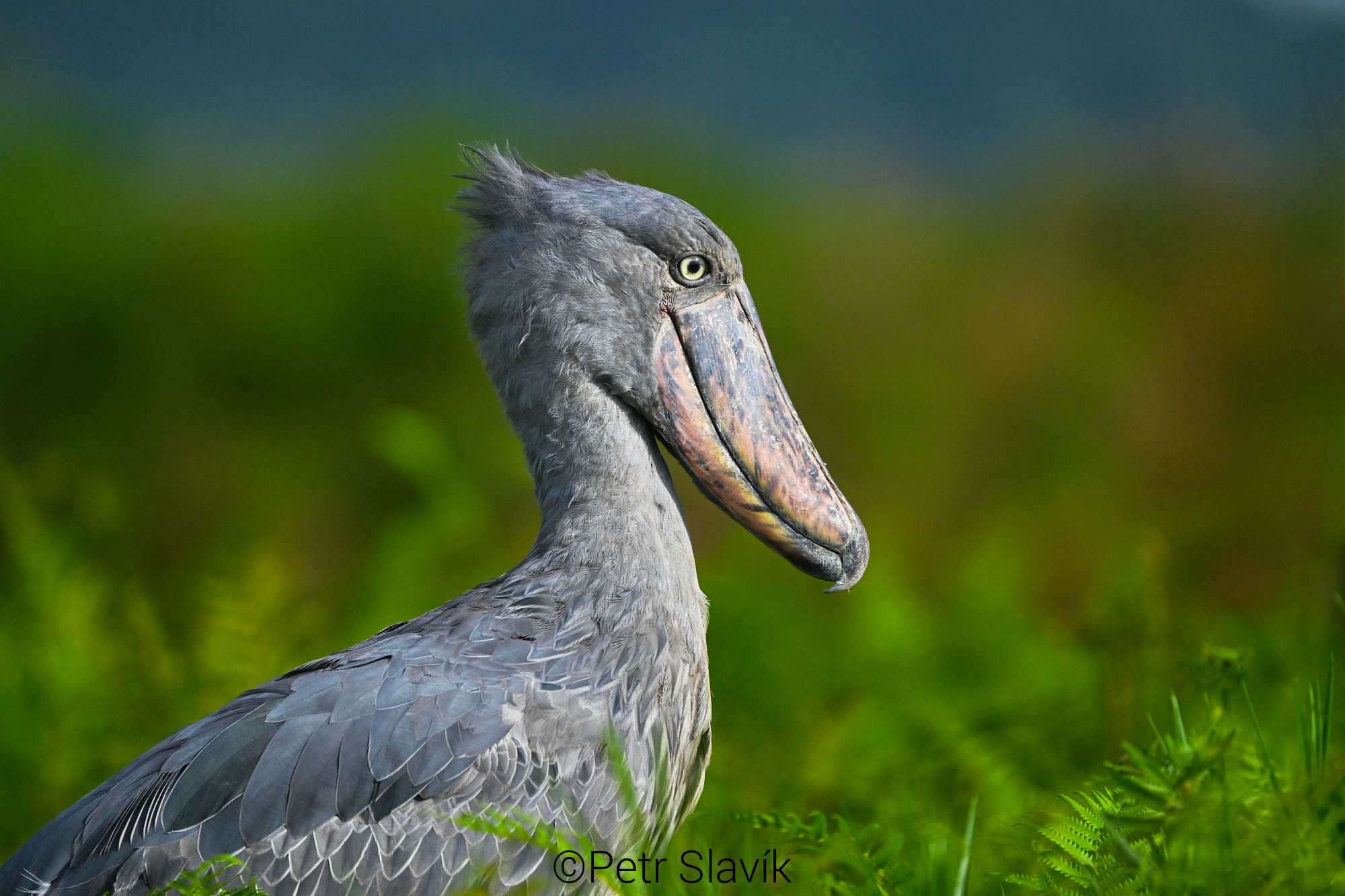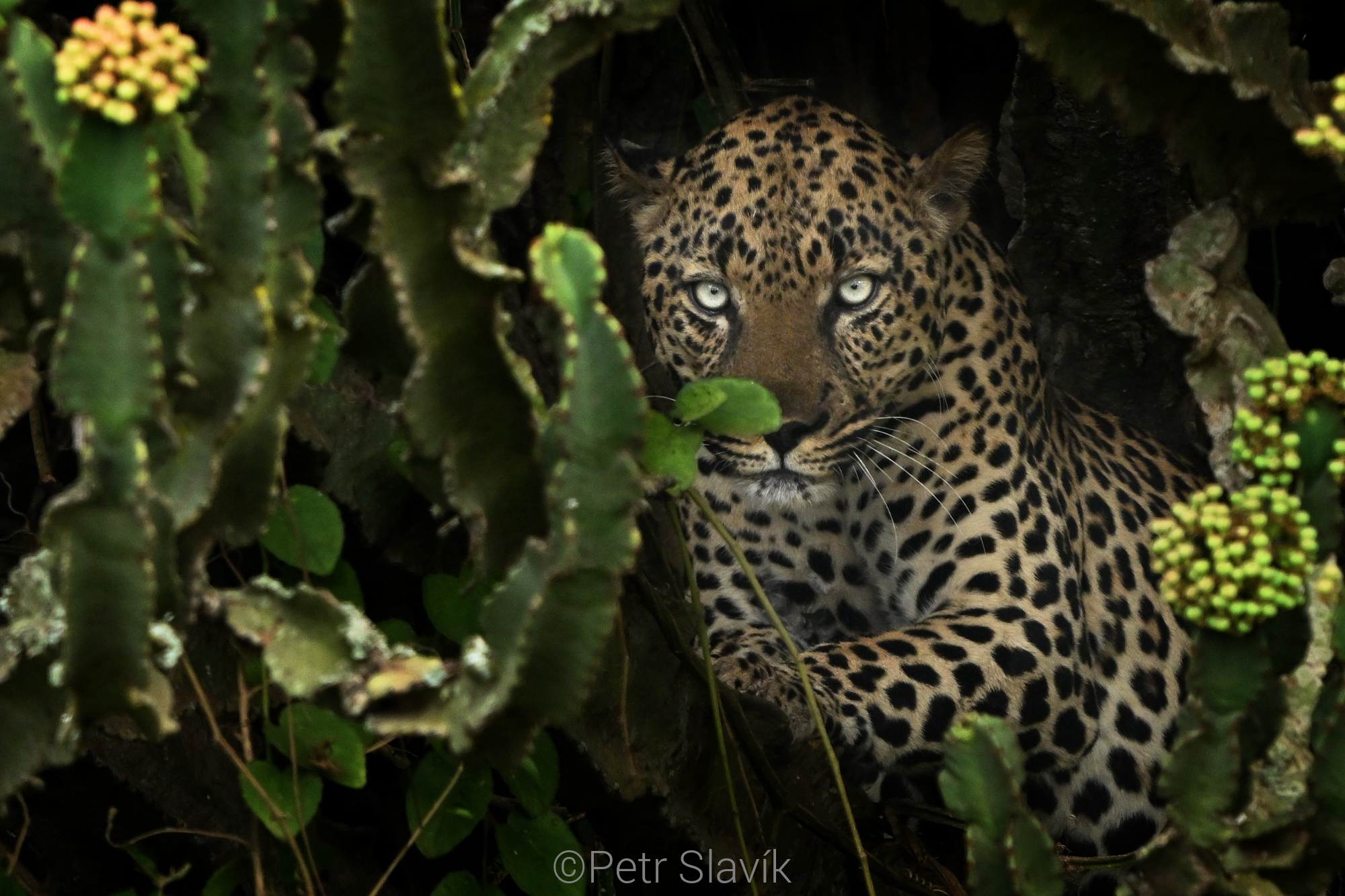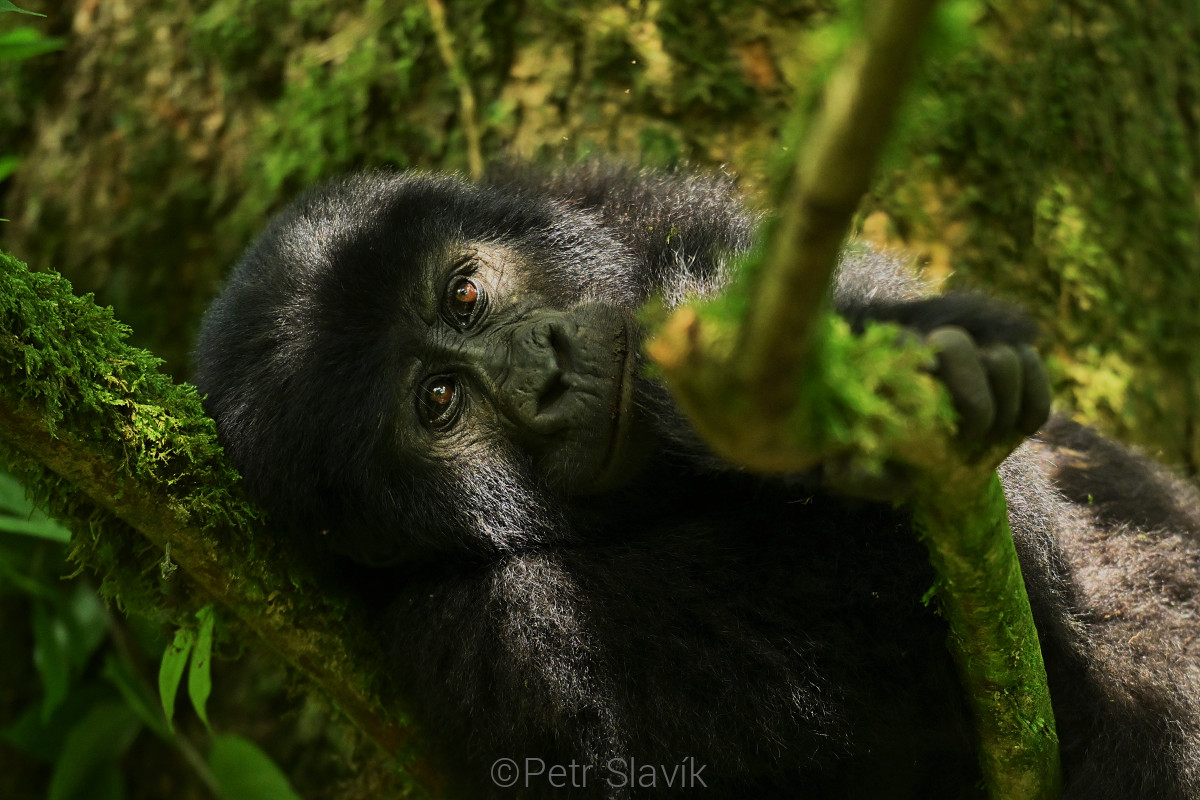
From the thundering waterfalls that Ernest Hemingway loved, across plains full of game, to montane rainforests. From the lazy flow of the Nile, past crater lakes and terraced tea plantations, to the Mabamba swamps. From the loud trumpeting of elephants and the night-time cackle of hyenas to the trilling birds of the jungle. Sit just a few metres from a majestic silverback, the leader of a family of mountain gorillas, and follow the trail of chimpanzees in Kibale with us. All this awaits you on a journey through one of the most beautiful countries in Africa – Uganda.
About the tour
Show more
Early in the morning the montane rainforest is full of cheerful sounds. The birds seem to be trying to outshout one another to announce the arrival of a new day to the world. At almost two thousand metres, the place feels almost mystical, wrapped in a misty haze that the sun's rays draw out of the ground soaked by yesterday's downpour. The trail is steep and slippery. A line of people climbs the steep hill at a slow pace. Now and then it stops to adjust its pace to the slowest. A colourful mix of people from all over the world who have decided to make their dream come true. To see the rare mountain gorillas in their natural habitat with their own eyes...
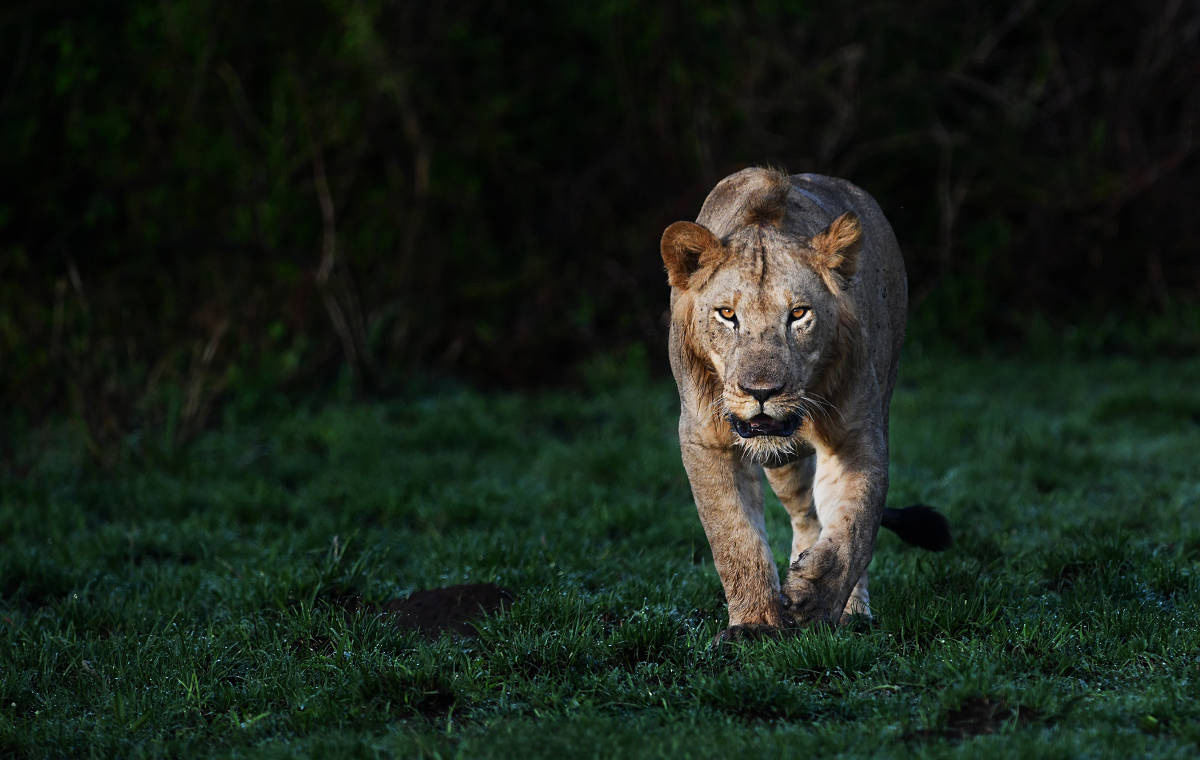
World travel agencies rank a visit to the mountain gorillas among the TOP 10 experiences you should have in your lifetime. Yes, it is incredible to be there with them. But Uganda is not only mountain gorillas; it is also chimpanzees in Kibale, beautiful shoebills in the Mabamba swamps and the "tree-climbing lions" of Queen Elizabeth National Park. Come with us to discover the thundering Murchison Falls, vast plains and the mysterious montane rainforest. By car, by boat, on foot! One of the most varied safaris awaits you right here in Uganda – the pearl of the African continent.
Itinerary
Show more
Day 1: Flight to Africa
Flight from Prague to Uganda (Entebbe International Airport); transfer to the hotel on arrival. Welcome to Uganda – enjoy the fresh breeze from Lake Victoria, the 2nd largest lake in the world. Have a good rest; your adventure begins tomorrow.
Day 2: Rhino tracking in Ziwa Sanctuary and a night safari in Murchison Falls NP
After an early breakfast you set off towards Murchison Falls National Park. Your first stop will be Ziwa Rhino Sanctuary, where you will have the chance to see rhinos. With the help of local guides you should soon find the rhinos and then spend a total of one hour with them. After this experience you will continue to the national park at Murchison Falls. Later in the evening a night safari in the national park awaits you. (breakfast, lunch, dinner)
Day 3: Safari in Murchison Falls National Park and a boat trip to the falls
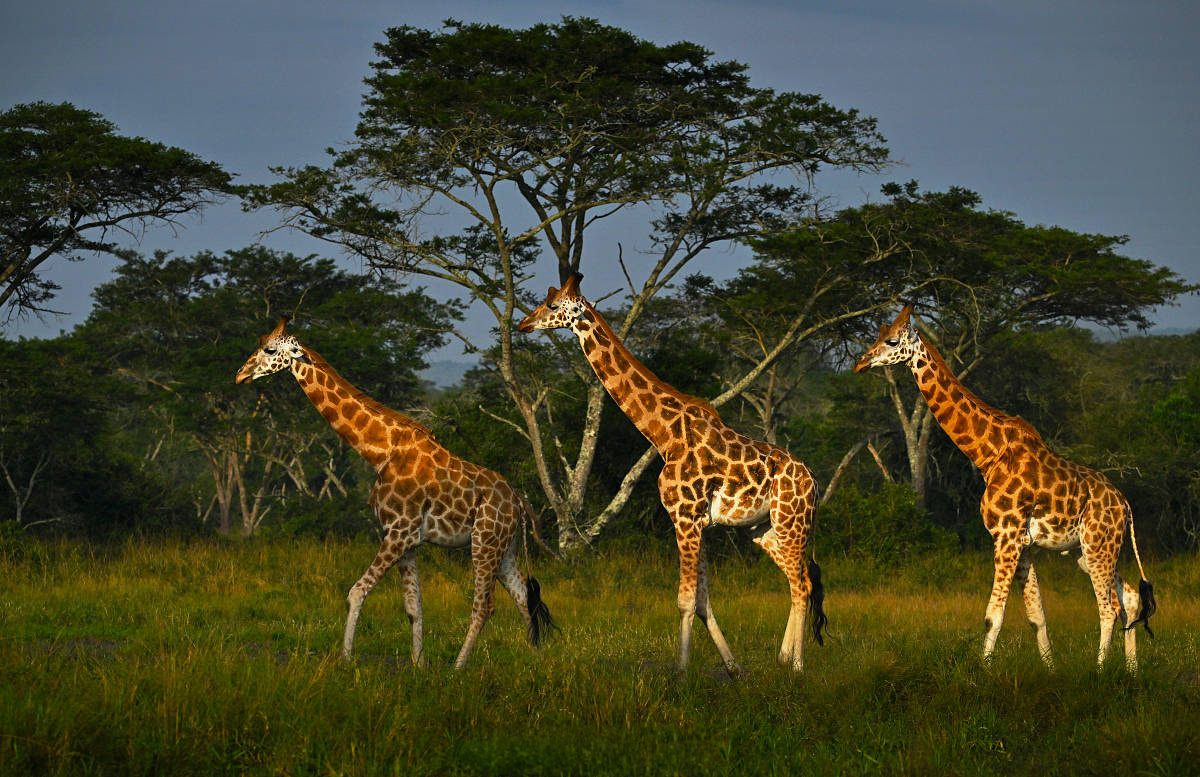
Murchison Falls National Park is the largest park in Uganda and offers many opportunities to see wild animals. After an early breakfast you will head along the northern bank of the Nile, cameras ready, looking out for giraffes, elephants, buffalo, leopards, lions and various bird species. Watching wild animals in their natural habitat as they feed, play or care for their young is an unforgettable experience.
After midday the safari continues on the Nile. A relaxed boat safari to the falls awaits you, offering further opportunities to observe life in and around the water (crocodiles, hippos, waterbirds, elephants…). Admire the power of Murchison Falls and its "Devil's Cauldron". (breakfast, lunch, dinner)
Day 4: Transfer to Kibale Forest NP
Early-morning transfer from Murchison Falls National Park to Kibale Forest National Park. Kibale Forest is a national park in western Uganda that protects one of Africa's largest rainforests and lies at an altitude of 1,100–1,600 m above sea level.
The afternoon will be free for relaxing by the pool at the pleasant accommodation. (breakfast, lunch, dinner)
Day 5: Kibale Forest NP – chimpanzee tracking and a visit to the local Bigodi community
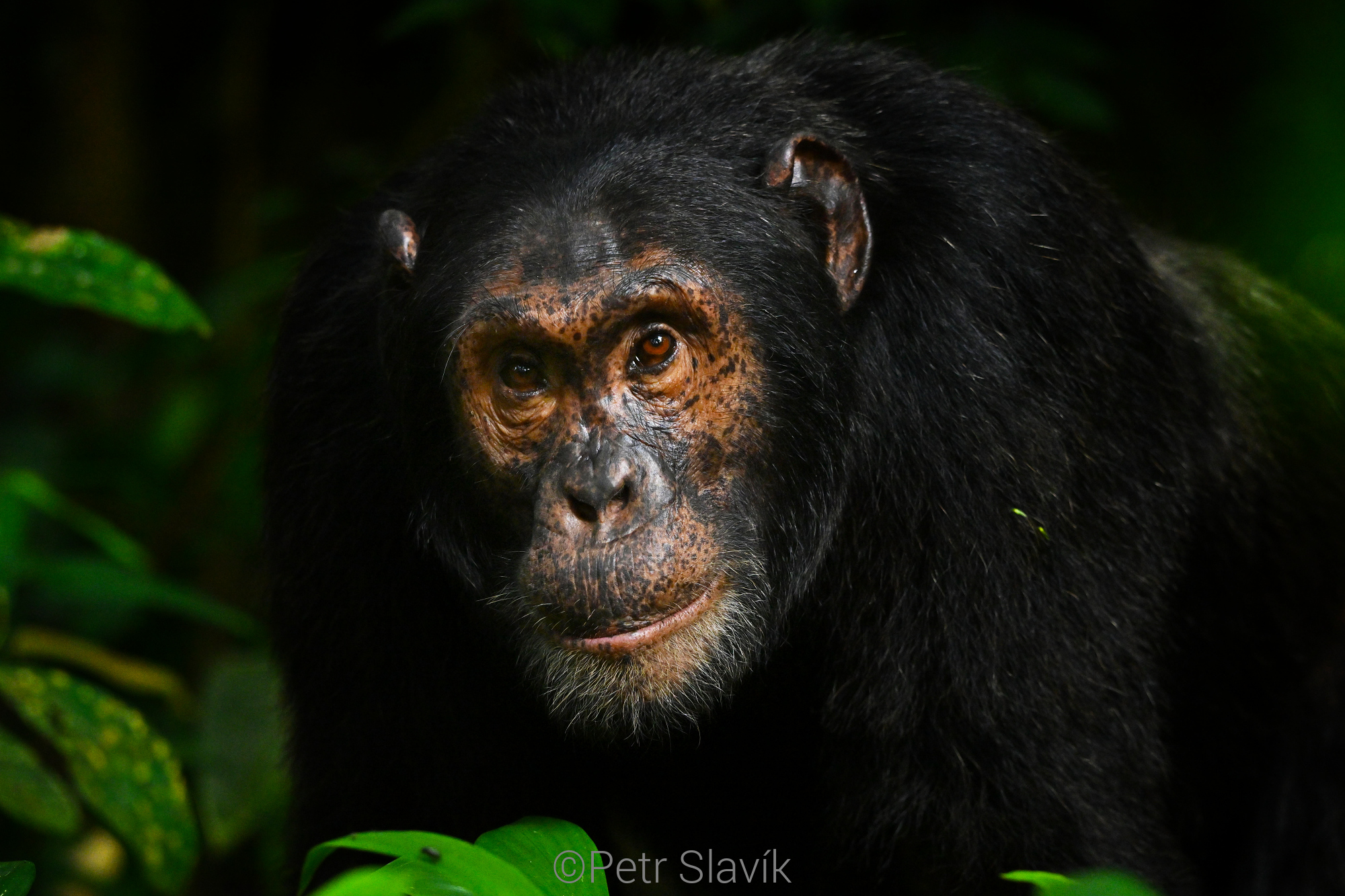
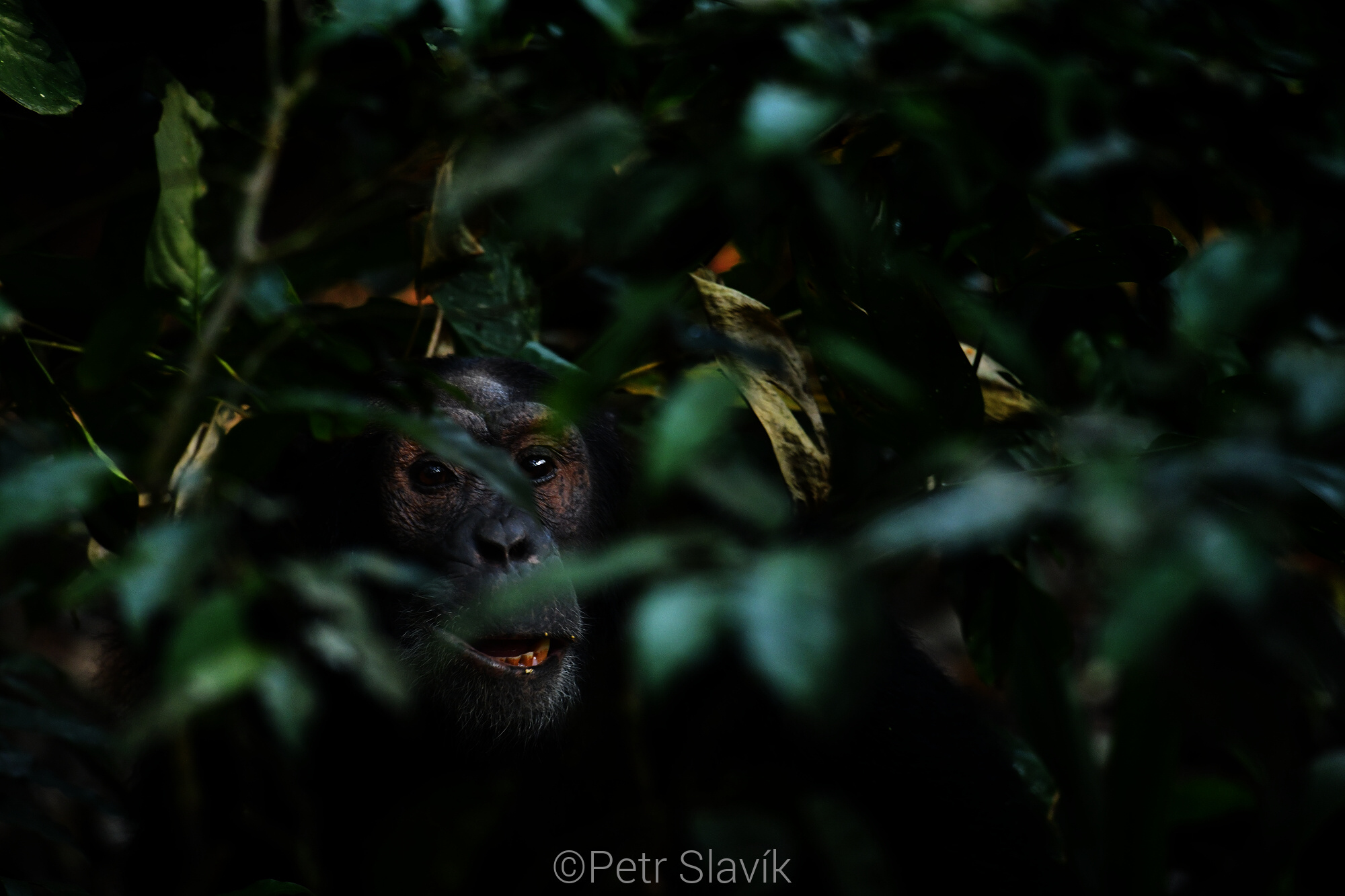
Kibale National Park is the primate capital of East Africa. The chimpanzee trek is an amazing adventure that takes you deep into the tropical forest. In practice it is a walk of about 4 hours through tropical rainforest over uneven terrain. Besides chimpanzees you may see monkeys such as guenons or colobus, butterflies and countless species of birds singing from the treetops. With the help of a guide you will track down the chimpanzees and can take photographs. Savour the moments when you can be close to these intelligent creatures.
In the afternoon, time and appetite permitting, you will visit the Bigodi wetlands, known for their diversity of birds and primates. By visiting the local village of Bigodi you contribute to the development of this community, as the proceeds are used, for example, to build schools. (breakfast, lunch, dinner)
Day 6: Queen Elizabeth National Park
After breakfast your journey continues to Queen Elizabeth National Park, where you will have the chance to explore the wildlife of the Kasenyi plains. On the way you will enjoy views of crater lakes and the mystical Rwenzori Mountains. Queen Elizabeth National Park is Uganda's second-largest national park, covering 1,978 km². It lies in the foothills of the Rwenzori Mountains mentioned above. On arrival in the park an evening safari awaits you, after which you will move on to tonight's hotel. (breakfast, lunch, dinner)
Day 7: Wildlife viewing and photography, and a boat safari
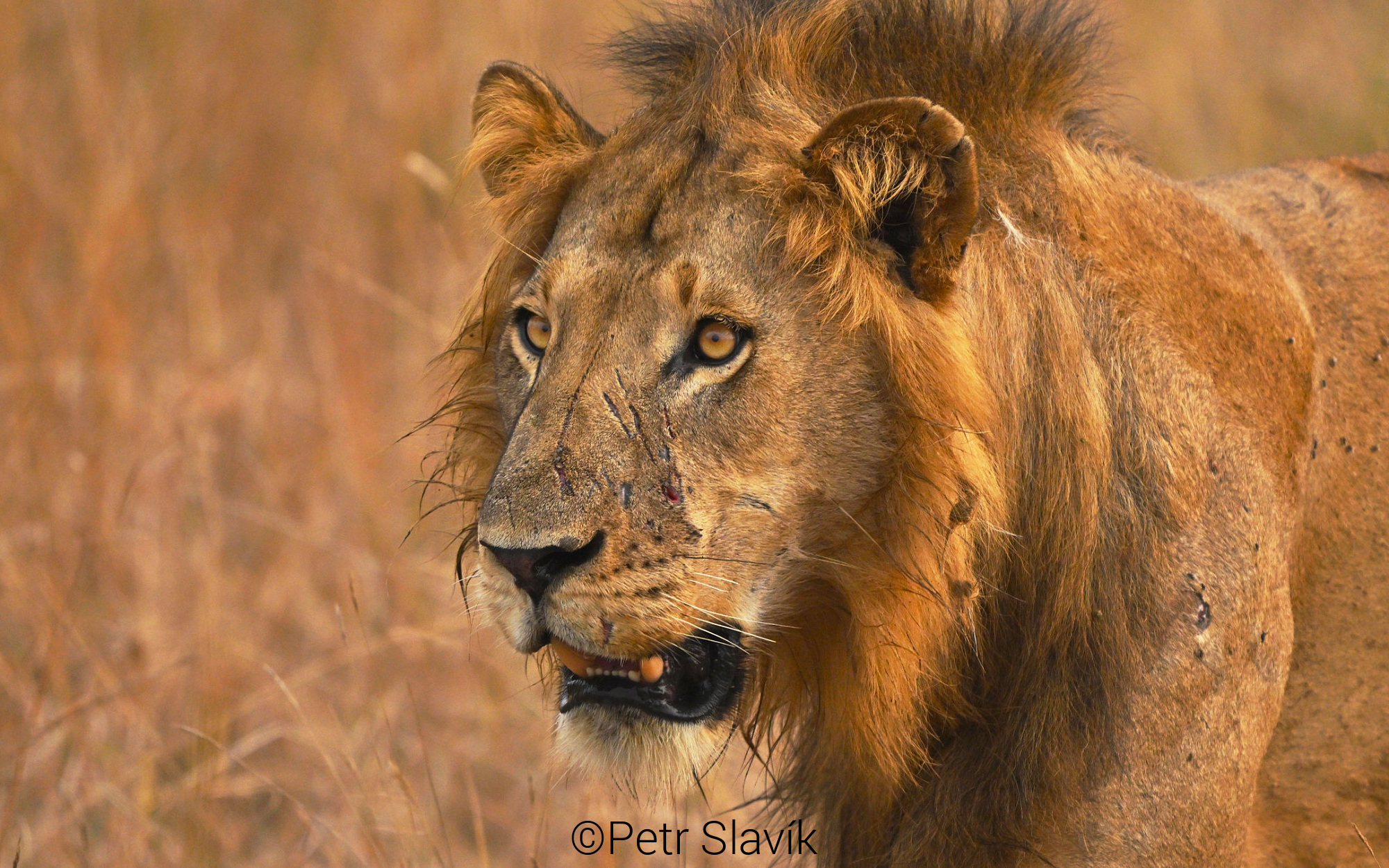
Today you will get up early in the morning and head out on safari to see the animals just starting their day. The game drive takes place on the Kasenyi plains in specially adapted safari vehicles designed for wildlife viewing. Lions, elephants, buffalo, kob, hartebeest and more await you, all between the Rwenzori Mountains and the escarpment of the Rift Valley.
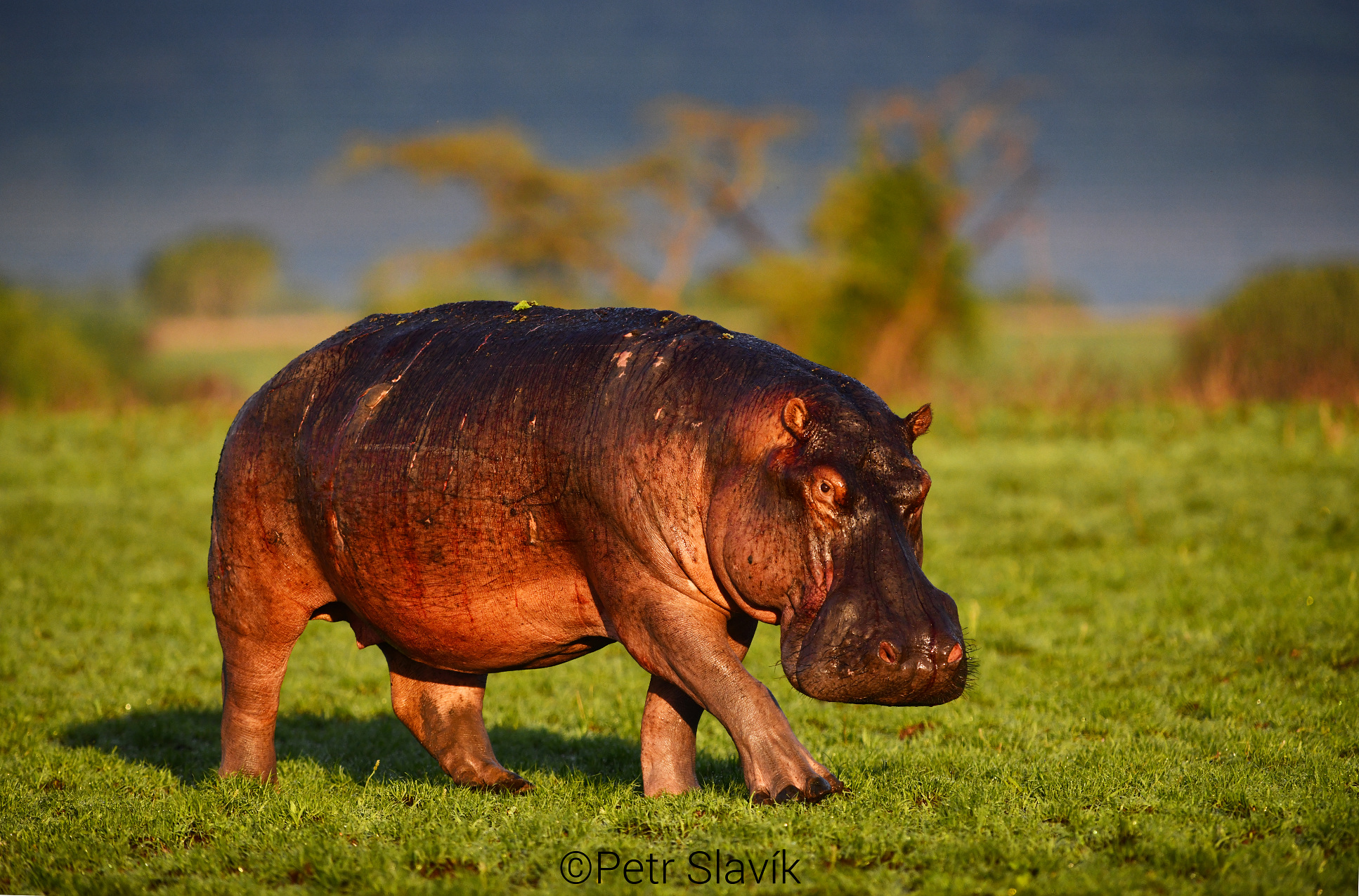
In the afternoon the safari continues with a boat cruise on the Kazinga Channel, the stretch of water linking Lake Edward and Lake George. The boat safari offers excellent opportunities to photograph birds on the banks, crocodiles, elephants or giant forest hogs. A large number of hippos also live in the Kazinga Channel. (breakfast, lunch, dinner)
Day 8: Transfer to Bwindi NP
Today you set off for the home of the mountain gorillas, Bwindi NP. Lunch will be on the way or at the lodge, depending on the arrival time. Your accommodation near Bwindi NP offers a great rest as you prepare for the next day, when you set out on your first gorilla trek. (breakfast, lunch, dinner)
Bwindi Impenetrable National Park lies in south-western Uganda on the edge of the Albertine Rift and is shared by the districts of Kanungu, Kabale and Kisoro. It covers 331 km² and lies at altitudes from 1,160 m (Ishasha Gorge) to 2,607 m (Rwamanyonyi Peak). The average annual temperature ranges between 7 and 20 °C.
Day 9: Mountain gorilla trek
After breakfast you will go to the national park's briefing centre. Here you will learn what to do and what not to do on a gorilla trek in Bwindi. Every trek is different and sometimes requires a lot of strength, so it can be demanding. You will probably be pushing through dense jungle (accompanied by local guides) to reach the gorillas. Because of the changeable weather, it is recommended to bring rain gear and waterproof footwear. There are also porters available who, for a small fee, are always willing to help visitors carry their backpacks. The rangers will instruct you on how to behave near the gorillas and, in particular, that you must keep a distance of 6 metres from them while observing. How long the search for the gorillas will take is never easy to predict (2–8 hours). It depends on where the gorilla families happen to be – some of them may be quite far away. You can then spend a maximum of 1 hour in the presence of the gorillas. (breakfast, lunch, dinner)
Day 10: Mountain gorilla trek and Lake Mburo NP
Another mountain gorilla trek awaits you today. Bwindi Impenetrable National Park is home to half of the world's entire mountain gorilla population. Other species of animals, butterflies, plants, mammals and reptiles also live here. After the briefing at headquarters, you will again head into the jungle with a guide and a ranger to look for mountain gorillas. In the afternoon you will transfer to Lake Mburo National Park. (breakfast, lunch, dinner)
Day 11: Morning safari in Lake Mburo NP and transfer to Entebbe, with a stop at the equator
After an early breakfast you will set off on safari in Lake Mburo National Park. This park is known for zebras, impalas, giraffes, antelopes, Cape buffalo and many species of tropical birds. A walking safari is one of the most authentic African wilderness experiences. You walk through the bush just as the first travellers once did, and come literally within reach of wild nature. Departure from the lodge and transfer to Entebbe, where you will spend the night on the shore of the famous Lake Victoria. On the way, a stop at the equator – at latitude 00. (breakfast, lunch, dinner)
Day 12: Shoebill expedition to the Mabamba swamps, transfer to the airport
Today a unique adventure awaits you in the Mabamba swamps, where you will look for the shoebill during a canoe trip. This huge bird lives in the papyrus swamps and looks as if it has survived from ancient times. The Mabamba swamps are home not only to this largest of storks but also to a huge number of other birds – among them weavers (Weyns's weaver, village weaver and Vieillot's black weaver), the yellow-throated greenbul, the splendid starling and many more. Occasionally you can also glimpse a flying jewel, the malachite kingfisher. In the afternoon, transfer to Entebbe and rest before the flight home. Transfer to the airport. (breakfast, lunch)
Flight to Europe.
Day 13: Return to the Czech Republic
Return to the Czech Republic.
Included
All necessary permits including two mountain gorilla permits, full board from dinner on the first day, transport throughout the programme, accommodation, services of local guides and trackers, and photographic guidance by Petr Slavík.
Not included
International flights, medical expenses insurance, Uganda visa (USD 50, applied for online), drinks, tips, personal expenses and optional extras.
Practical information
Show more
A physically more demanding programme with limited time with the gorillas.
TRAVEL DOCUMENTS
Your passport must be valid for at least 6 months from the date of entry into the country. Keep a copy or scan of your passport separately.
VISA
Visa requirements vary by destination. Before the trip we will send you the exact procedure, a list of documents and a link to the official website. Carry a printed visa confirmation; it is checked at airport check-in.
VACCINATIONS AND HEALTH PREPARATION
For African destinations, an international certificate of vaccination with a yellow fever vaccination is usually required or recommended. Vaccinations against tetanus, measles, typhoid and hepatitis A and B are also recommended. Consult a doctor at a travel health clinic or vaccination centre about antimalarials. We recommend a medical check-up before the trip. Everyone takes part in the programme at their own risk and responsibility.
MEDICAL EXPENSES INSURANCE
Medical expenses insurance is not included in the tour price. Every participant is required to take out valid insurance for the entire duration of the tour. Travelling to remote areas without it is a major risk. We will be happy to arrange insurance for you.
MONEY AND TIPPING
For personal spending we recommend US dollars in cash, which we will exchange into local currency. Bring newer banknotes; older series are often not exchanged in Africa. As a guide, allow USD 50 per day. In Africa it is customary to tip the staff who look after you; the usual amount is around USD 200 per person for the whole tour, and the guide distributes it. It is not compulsory. You can pay by card in most hotels, usually with a surcharge, so treat it more as a reserve. Also keep a cash reserve in case of medical treatment, which often has to be paid on the spot and is reimbursed by the insurer afterwards.
LUGGAGE
Standard allowance is 1 checked bag up to 23 kg and 1 carry-on up to 8 kg per person. Carry all electronics, including cameras, chargers and power banks, in your hand luggage. Hand luggage must not contain sharp objects or liquids over 100 ml, up to a total of 1,000 ml. We recommend locking your luggage.
ELECTRICITY
African destinations commonly use 230 to 240 V, but the type of socket varies by country. A universal travel adapter is a must.
PHONE AND INTERNET
Czech operators have roaming agreements in our destinations and phones work without problems. Accommodation usually offers free Wi-Fi. If you need to be online during the day as well, an eSIM such as Airalo works well.
FOOD AND HYGIENE
If you have any dietary restrictions or allergies, please let us know in advance. Drink and brush your teeth only with bottled water. Avoid ice, mayonnaise salads and ice cream. It is worth starting to take probiotics before the trip and packing medicine for traveller's diarrhoea.
SAFARI RULES
Drones are not allowed during the safari. You may only get out of the vehicle with the driver's consent. A safe distance from the animals is kept, and the instructions of local guides and trackers must be followed.
TOUR LEADER
The tour is led by photographer Petr Slavík. You are welcome to consult him about photographic equipment and gear before departure.
Recommended gear
Show more
FOR THIS TOUR
A fast zoom lens, waterproof clothing, protection for your equipment.
PHOTOGRAPHIC EQUIPMENT
Telephoto lens, wide-angle lens, polarising filter, waterproof protection for your equipment, plenty of memory cards, spare batteries and chargers, a power bank, a head torch.
CLOTHING AND FOOTWEAR
Muted natural colours. Long-sleeved shirts and long trousers because of the sun and insects, light layers for cooler mornings, a waterproof jacket. Sturdy closed footwear; for treks through vegetation, sturdy hiking boots. A hat, sunglasses, a scarf against dust.
DOCUMENTS AND SMALL ITEMS
Passport and a copy, international certificate of vaccination, insurance card and insurance confirmation in English, emergency phone numbers, cash in USD, payment card, binoculars, a pocket knife in your checked luggage, high-factor sunscreen, repellent, lip balm, toiletries.
FIRST-AID KIT
Any medicines you take regularly, plus basics: an anti-diarrhoeal (e.g. diosmectite), travel probiotics, nasal and eye drops, a sore-throat remedy, an expectorant (acetylcysteine), paracetamol or ibuprofen, an antihistamine gel, a bandage and blister plasters.
Accommodation
Well-located lodges and hotels chosen for their proximity to the morning activities. Full board starts with dinner on the day of arrival.
Transport
Intercontinental flight with one change; on site, off-road vehicles with local drivers. Transfers between parks in Uganda are longer; expect some full days on the road.